Wednesday, August 26, 2009

On Bravaura Storytelling


District 9 is a film spilling over with anarchy and nihilism, though maybe the filmmaker’s didn’t know it.

The director is Neil Blomkamp, a first-time feature director and native of South Africa who made the film with the ‘small budget’ of $30 million, much of it on loan from producer Peter Jackson. Jackson let the director cut loose, and there are as many explosions, gun-battles and shaking cameras as one could squeeze in to such a film, though all are framed by an uncommonly clever story. A massive alien spaceship has been hovering over Johannesburg for over twenty years, while it’s crew, comprised of thousands of insect-like, tentacled aliens have occupied the ghettos of the city. By 2010, the government and residents of the city have become fed up with the aliens and a team is created to deport them from their current occupation in to a designated site called District 9. The team is led by Wikus (Sharlto Copley), an irritating, arrogantly jovial man who may have been hired for the job simply because he is married to the daughter (Tania Haywood) of a top government figure. Naturally, the aliens are uncooperative and Wikus is not the right man for the job; but once he accidentally swallows a brown alien substance found while raiding one of their shacks, he slowly begins to transform in to one of the aliens (known as ‘Prawns’) himself, and becomes a target of the government. While on the lam, he is forced to rely on the alien in whose shack he found the substance, and who claims he can turn Wikus back to normal.


(Map of District 10, Johannesburg, South Africa)

One of the most memorable snippets of the film is one that occurs by-way of Blomkamps storytelling form of choice; a mixture of straight documentary, sequestering the action-packed plight of the rest of the story. The snippet is in a documentary segment near the beginning, in which a T.V commentator is talking about the plan to take care of the aliens, and mentions the opposition of human rights groups. There is a quick shot of activists holding signs and shouting in the streets, and in the context of this story it seems completely zany, but it is meant to be taken at face value. Because District 9 is almost a merely inspired, bombastic science fiction film that adheres to the pulpiest aspects of the genre, except for one thing; it’s an allegory of Apartheid. Blomkamp deserves credit for choosing such an ignored subject of cinema and framing it in such a peculiar way, but the internal flaw of the allegory is that those were Humans and these are Aliens. By way of it’s documentary realism, the film is asking us to remove ourselves from entertainment and seriously consider: What if Aliens landed here on Earth? It’s own answer to the question only begins with the shot of human rights activists, and although hilariously accurate, Blomkamp doesn’t want us to think it’s hilarious; it is just dead accurate. These people on the margins, these protestors, have the right idea about how to live with these creatures, while the majority of South Africans are prejudiced and the totalitarian government simply has it’s own agenda. But when I considered what would happen if aliens really landed on earth, I quickly realized that I would fully support a plan to get them out of here as quickly as possible. The aliens in this film are mostly portrayed as brutish and not very intelligent, have been hanging around for over twenty years, and posses weapons; some of them kill. With all this considered, a program to put them far away from human civilization looks reasonable enough. That one alien (and his cute son) do gain our sympathy in the film, as we spend more time with them, does not save the overall allegory. Blacks are people and are entitled to human liberties; aliens are intruders, and their predicament makes human rights activists look silly.

Yet what ensues is far more, even, than a socially conscious sci-fi action film. District 9 contains, as one other critic put it, ‘bravura storytelling.’ This is ultimately the emotional sum of its parts. On one hand, it’s story is indebted to the stories of trade paperback science fiction magazines of old that have now been consigned to used bookstores and special collections. Yet those stories did not utilize grainy surveillance footage, CGI-created characters, or T.V imagery; in these respects, the story is indebted to modern technologies. Also thrown in to the mix are the slow-motion shots that occur in films when a character is getting ready to take care of business, and a token baddie, ordered to capture Wikus, who comes in to the film late and acts as if he’s at a frat party the entire time. Given this intense mixture, Blomkamps storytelling approach involves both caricatures and fleshed-out characters, genre clichés and inspired visual sensibility. 

All bravaura storytelling encompasses both talent and fault, and there are several major talents at work here; one is the lead actor Sharlton Copley, who manages to hold every scene he’s in back from all the  CGI and gun-battles and misguided satire. He is a true performer who does not need to be an action hero to make us keep our eyes on him, even in spite of his ridiculousness. And the cinematography, by newcomer Trent Opaloch, can be a real visceral wrench; watch as he cuts back and forth between Tania being assured by her father that her husband is dying and she has to ‘let go,’ and shots of Wikus being wheeled, screaming, in to a spooky government operating room where his surgeons intend to cut his heart out. But bravura storytelling needs to be anchored in fundamental storytelling, and District 9 fails to follow through on several of its fundamentals. All allegories must be logically reconciled with that which they represent in reality; all clichés and caricatures will not necessarily be mitigated by the audaciousness of other aspects; and all those protestors may be where the actual satire resides.


Wednesday, August 19, 2009

I Met a Murderer


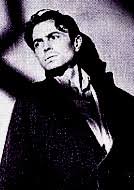
In 1939, the forgotten English filmmaker Roy Kellino made a home movie with his then-wife, Pamela Kellino (later Pamela Mason) and an unknown actor in his late 20’s, James Mason. Kellino shot the film himself, in the farmlands of Northern England; he and Kellino and Mason collaborated on the story. The result was an eighty-minute thriller called I Met a Murderer (1939).

The film, which screened at Film Forum as part of its Brit Noir series, must be the WASPiest B-Movie ever made; replete with images of farm dogs running over the hills, farmers carrying rifles and pipes, wooden bridges crossing over brooks and stone-leaden architecture. It is also, for its time a conventional film. Conventional here is used in the best sense of the word; it adheres to various melodramatic traits of studio films of the time (and to an extent, today). It features an orchestral music score almost throughout the entire film, and has customary close-ups of the actor’s faces at the right moments. It’s story is one of extreme formula; a man-on-the-run story that Hitchcock was riding to the hilt at the time. In this particular version, Mason plays a dutiful, hardworking farmer with a wife who can’t stand him or his farm anymore. In retaliation against his strict rules and treatment of a somewhat dim farmhand, she shoots his beloved dog. In retaliation, he shoots her. Although he plans the stay on the farm, his neighbor’s daughter is finds the spot (not very inconspicuous) where he has buried his wife and starts digging. The last shot of Mark we get is of him is a distant fade of him jumping a wooden fence and running away from his farm. From that point on, he is on the run from Scotland Yard, but along the way he meets another wayward soul named Jo—a novelist of all things-- played by one of the most gorgeous women to appear on the English-speaking screen, Pamela Kellino (later, Mason). Jo acts as if she wants to aimlessly frolic and vaguely seduce Mark. But Jo comes to be revealed as a most unusual femme fatal who knows exactly what his predicament is, and is using him as fodder for her own imagination.

I Met a Murderer feels like it is a series of sequential ideas for a story shouted out by friends on a long car trip. Yet it still visually adheres to the story; first in the wide-open vistas of Mark’s farm, then in the slow pans and dolly’s through the countryside as Mark and Jo run from the law. But within this form, there are various stylizations that would not appear in mainstream films for several more decades; the camera zips from an object to a characters face at intense moments; animals are featured prominently as things that humans use Each scene starts with a conventional establishing shot before delving in to any specifics, but this is because the locals ask for it; this region of England, blanketed by hills and lapses of forest, by mellow streams and farm after farm is the least typical place to set a chase film. Its sheer beauty does not need color to be admired, and rural set mysteries or chase films such as Fargo or Badlands come to mind from time to time. As with those films, Murderer uses the landscapes as one with the psychology of the characters, though to a far more subtle degree. This is unusual for such a low-budget, often campy film, and is perhaps Murderer’s most admirable attribute.

Unfortunately, what tends to cut into the film’s visual obsessions is its awkwardness. In the scene where Mark and Jo first meet, on a rainy night under an overpass, she offers him a cigarette, but takes none out of her pocket; he offers her one of his own, but she says she does not smoke; she has been standing in a tentative position, as if over-excited; then we see a sudden close-up of her in which she seems to be standing rigid position and the background looks different. The awkwardness in this scene stems from the visual, the written and the actor’s gestures, and it glares elsewhere in the film; Jo’s hairstyle, for example, seems to change from shot to shot. The exposure is not always good (the film was shot entirely on location, rare for it’s time) and frames are missing from the print. Not all of these faults are necessarily faults of the filmmakers, and much of the time it is hard to care anyway. In one scene, Jo and Mark are pulled over by two policemen for speeding. Jo gets out of the car and seductively apologizes to the officers for her mistake. The affect she has on them is the same affect she has on the audience; in clear view of all the errors, we just let it go.


(James Mason, I Met a Murderer; Director Roy Kellino.)

I Met a Murderer is an imperfect yet genuinely independent film from a long time ago that bears interesting similarities with the low-budget Indies of today. As with many Indies today, it is overstuffed with ideas, imperfectly acted, imperfectly shot, but endearing nonetheless. This appears to be the ideal feel for an independent filmmaker’s debut; Jarmusch captured it with his early features, Wes Anderson captured it in Bottle Rocket, and even a movie like Napoleon Dynamite was greeted the-imperfect-little-film-that-could. But unlike those movies, I Met a Murderer did not accept any particular niche audience that it will appeal to. It did not take the quirks of previous movies and update them for it’s own style, either. Murderer comes from a time when there was no such thing as niches in a large-scale sense and the main duty of a filmmaker was to tell an interesting story and tell it so people could understand it. This is probably the ultimate convention Murderer adhered to, and in this way it can both be labeled a ‘B-Movie’ and is just an entertaining story. If more independent filmmakers simply returned to conventions these days and stuck to their stories rather than their quirks, perhaps we could have a real independent film resurgence. Convention is the lifeblood of storytelling. 


(Pamela Mason)

Friday, August 14, 2009

Nostalgia and How to Lighten up about It: Funny People

The opening of Judd Apatow’s new comedy Funny People is, in relation to what follows, the most moving part of any Apatow movie. It consists of home video footage of Adam Sandler making prank calls while his roommates participate and try to stifle laughter. That the footage is probably authentic-- it may be real off-the-cuff footage of Sandler joking around before his true days of fame-- highlights both the sentimentality and nostalgia of this film.

            We are led in to the rest of the film by way of Sandler’s character, a forty-something standup comic George Simmons, being informed that he has an aggressive form of Leukemia and that his prospects of survival are grim. We see him looking through pictures of an old girlfriend (Leslie Mann) and calling her to tell her he is ‘sorry about everything,’ stopping short of saying a word about his illness. This is a man who has stopped short of everything in life barring a good joke; he did not get married, he did not keep in touch with his family, and he likes being around people only if they serve his needs. He stopped short of having friends. 

There are already several firsts for Apatow and crew less than a half hour in to this too-long film: for once, Apatow is establishing a character and a mood without resorting to any blaring quirks or profiling. Simmons is simply another beloved celebrity who lives in a beautiful house in an arrogant, bitter world of his own invention. Subsequently, this is also the first time Adam Sandler has given a good performance. Under his freakish man-child façade there has always been a layer of pathology and despair, and Sandler has built a character with these qualities while nonetheless being witty and effortlessly hilarious. Humphrey Bogart would have played a character like George Simmons had he been wise to the world of standup comedy.

            Ira Wright, too, is a character fashioned from despair. Seth Rogen plays him as an eager and neurotic jewish standup comic, albeit one who is realizing with dismay that has a long way to go before he gets solid laughs. When George Simmons sees him at a standup venue he decides he likes his jokes enough to hire him to write jokes and generally take care of him for $15,000 a week. Ira is flattered, although we know that Simmons really just needs someone to project his loneliness on to. Eventually, though, even we are confounded; Simmons confides to Ira before anybody else that he is dying of cancer and comes to appreciate Ira’s devotion, as well as his genuine talent for writing jokes. Ira comes to need Simmons, too; for one, to escape from his self-centered roommates (Jonah Hill and Jason Schwartzman) and for two, to learn how to pick up girls.

            All the films Apatow has produced or directed hinge on one character who is a good, earnest person and everybody around him acting lowlier than they should. This, too, is given a slight change-up in Funny People; there are two earnest characters, one who is simply the type of guy we would not think of as such if we didn’t get to know him. Also, all characters do at least one selfish thing—Ira neglects to tell one roommate that Simmons also wanted to hire him—and at least one decent thing— a snotty female acquaintance (Aubrey Plaza) admits that she was wrong to sleep with Ira’s roommate days before they were supposed to go on a date.

            Apatow’s movies are the also the most modern movies being made today. They are packed with sounds of cell-phones interrupting conversations and meaningless apologies. They are leaden with images of corporate logos casually sticking around everywhere and of guys watching T.V or smoking pot or drinking to stave off boredom and awkwardness. They are also modern in the sense that they want to appeal to a populist sense of humor while also dealing with real issues facing people today. It is here where certain intentions of Funny People come in to friction with each other; Apatow wants to make the epitome of movies that work within the Hollywood system and are also ‘smart’; movies that are both down-to-earth and feature one outrageous joke after another. But because of this approach we are treated to scenes in which George, after finding that he has gone in to remission from cancer, has a party featuring cameos from every celebrity imaginable, or later scenes of marital strain between George’s old girlfriend, Laura (Leslie Mann) and her husband (Eric Bana) in which the kids remain unaffected by their parents plight to a cynical degree. The elaborate and convulsive plot does not help to reign in the obscene jokes or the nudging and winking for the sake of some more plausibility. Those who would say that these movies are not supposed to be plausible, only funny, are wrong in this case; Funny People strives to be a deeply humanistic, believable movie, but there are too many populist obligations that get in the way. There has to be more celebrities, more profanely shouted sex jokes and a last minute reconciliation. It’s the rules.

            But Funny People still tries more new things than any previous Apatow film has done, or even than most mainstream comedies do. All of his movies purport to be character driven, but movies like The 40 Year Old Virgin and Superbad are really impulse-driven. Funny People is genuinely a movie about funny and complicated people. Apatow and his actors could still learn a few things about performance-driven humor, from Mike Leigh, for example. But his new film is daring in its own way and if that confuses his regular audience then that might just confirm how compassionate a storyteller he really is.

Monday, August 3, 2009

The Perils of Piracy


In the July issue of Sight and Sound, Nick Roddick writes; '...there is a whole generation who remain unconvinced that downloading commercially produced movies and music remains less serious than, say, scrumping apples in a more innocent age.' While this was probably intended as a humorous comparison, Roddick goes on to let us know that in the Victorian Age children were jailed for scrumping apples. Would children also be jailed for tearing pages from the serialized copies of Charles Dicken's novels until they accumulate the entire manuscript for free? Of course they would have, and that is a more accurate-- albeit more haphazard-- comparison for downloading movies. 
Nick Roddick would agree that downloading movies is problematic to say the least and that steps taken to persecute individuals doing the downloading need to be re-organized. But he does not get at why downloading movies could be considered a sin in the first place. Just as it would be a sin-- a violation of media form, let's call it-- to put together torn pages of Dicken's books and do what you would with the full manuscript, it is a violation of media form to even watch movies on a computer, with your mouse jutting in to the picture at the slightest movement, the space bar pausing the film to allow for the pizza to be ordered, Liv Ullmann and Bibi Andersson's merging faces interrupted by an Instant Message. The creators would never have wanted to see their work this way, and your eyes are being robbed to boot. If one saw the pictures on a big screen in a darkened room, only then are they achieving the full experience of the film, even if they don't know it. 
As is obvious, the comparisons to Dickens have ended. Very well, and all the more reason to regard films as a unique 20th century media form reliant on very specific technology. But these are all abstract arguments, I know, and they won't persuade the majority of people downloading movies. So here is a more practical argument: downloading movies hurts small production companies and distributors. A major company such as Dreamworks can afford to lose some money off of the illegal downloads of Tropic Thunder, but the executives at Gigantic Pictures might tremble is they heard of even a handful of illegal downloads of Goodbye Solo. There are always people who will still see the movies in a theater, and those who will buy it on DVD, but we can't draw such clear lines. What if someone sees it in a theater and then goes home and downloads it? What if someone buys the DVD, rips the movie from it, and puts it online? The world of film-watching has become a dismayingly double-crossing place.
Most people would still say that sending someone to jail for a few illegal downloads is too much, and I would agree. I would fully stand behind an initiative to cut down admission prices to theaters, and I would see nothing wrong with a movie being downloaded with the consent, or express wish, of the filmmaker. But I have no qualms with a fine, or a series of fines that increase with each illegal download. As of now, Great Britain is using the ultimatum that users access to the internet will be cut off if they continue downloading movies for twelve months after they have been asked to stop. France tried enacting a similar plan, though it was recently voted unconstitutional. The legitimacy and effectiveness of these plans is debatable; should we simply leave the policy up to the companies? For now, I stand with the small distributors, their small films and their struggling filmmakers who deserve to make their cents worth from what they spent months toiling on. Although I stand against every bad movie that a company like Dreamworks puts out each year, by the same logic, I stand with them on this issue too.