Friday, November 20, 2009

Are Screenplays readable?


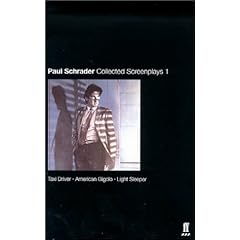
The opening of Paul Schrader's screenplay to Taxi Driver is an exemplary exercise in visual character study. It starts with:

"Travis Bickle, aged twenty-six, the consummate loner. On the surface he appears good looking, even handsome; he has a quiet steady look and a disarming smile which flashes from nowhere, lighting up his whole face. But behind that smile, around his dark eyes, in his gaunt cheeks, one can see the ominous strains caused by a life of private fear, emptiness and loneliness. He seems to have wandered in from a land where it is always cold, a country where the inhabitants seldom speak. The head moves, the expression changes, but the eyes remain ever-fixed, unblinking, piercing empty space.

It is a combination of adjectives, similes and facial description that has been used time and time again, not just in screenplays. But the technique’s natural home seems to be screenwriting; screenplays need to be both concrete and suggestive, and not much else. The actor needs material to extrapolate on and the director needs a picture to form in his head.

In the following paragraph, Travis is described in greater detail: "He wears rider jeans, cowboy boots, a plaid western shirt and a worn beige Army jacket with a patch reading 'King Kong Company, 1968-70.'"

All of this makes for great reading in itself and the finished product, the film Taxi Driver(1976), consequently makes for fascinating viewing. But that is just the issue; a screenplay is only a part of a sum. The sum is what you see on a screen. The director and screenwriter may even be the same person (in the case of Taxi Driver, they are not), but the screenplay remains only part of the advancement. It is a mean, and not an end.

To get at the screenplay’s role in this advancement—the process moving towards completing the film—we must consider is that sometimes a screenplay is not necessary at all. Far from every fine movie has one. Especially in the first thirty years of cinema, screenplays were strictly limited objects; they were called ‘scenarios’ and sometimes even scenarios were not present. D.W Griffith apparently kept all of the scenes and the chronology for Birth of a Nation in his head. Buster Keaton would remark late in his career that he had never seen a script; the precise content of his films came about through simple brainstorming and happenstance. Eisenstein made Battleship Potemkin on the basis of a scenario that ran for only a few pages.

The practice of screenwriting and the modern elevation of screenwriting to the form of a separate art, are modern occurrences that came about by the transition of films from silence to sound. With the development of sound came the introduction of dialogue and voice-over narration. Only around the 1930’s and 40’s did screenplays start to gain in supposed literary value. Writers such as William Faulkner and Raymond Chandler moved to Hollywood and started churning out screenplays such as Double Indemnity (1944) and The Big Sleep (1946). Films began adopting novelistic devices and with this heightened sense of realism came a heightened sense of artistic importance. If the reputations bestowed on the Director were that of the visionary or ‘the Auteur,’ then the screenwriter earned the reputation of the character developer and the plot-stirrer. The screenwriter was the solitary artist who lit the spark. Once this fact was recognized, a batch of distinctive screenwriters could be named. William Goldman, Tonio Guerra and Jean Claude-Carrier were some of the screenwriters from around the world who Directors wanted to work with. They may have even been Auteurs themselves. In that case, the logic went, why not publish their screenplays?

But many of the great filmmakers since have continued the traditional practice of limiting screenplays. Robert Altman shot Three Women (1977) without a shooting script; just a few images he had witnessed in a dream. Mike Leigh never uses screenplays until the very last minute, and they are always comprised of months improvised material by the actors. Bela Tarr remarked recently that he and his screenwriting collaborator, Laszlo Krasnahorkai, only wrote a screenplay for the producers of the films. The point, in other words, is in the hands of the many people collaborating on the film, and is gleaned from a set of images. In the cases of these directors and their films, only the most rudimentary outline—or, a scenario-- has sufficed. Their films are no less character driven or narrative structured; to call a Leigh or an Altmam film such would be blasphemy. But nobody would think of publishing a collection of notes that runs for a page or two, and it is impossible to publish a dream. The general public would not understand it, nor are they meant to.

This is not meant to be value argument about how good any given screenplay or screenwriter is. But ideally, a screenplay is just for the director, the actors and the film crews. It is not literature; it is not meant to expand knowledge or 'open minds,' it is meant to provide a framework for moving imagery. This should be the first task on a screenwriter's mind, rather than providing entertainment, or food for thought, for the general readership. But the idea that they should provide these things has led screenwriters to arrogance, clumsiness and overzealousness. The Coen Brothers publish anthologies of their screenplays; Werner Herzog has boasted of his screenplays, which he publishes himself, as being "new forms of literature." Charlie Kaufman, the newest, hippest screenwriter to get name recognition, is hailed as a screenwriter with a distinctive style that shines through in each film he makes. As a result, he has the inclination to write the same film again and again, with different bends of genres, and louder levels of zaniness being shook up in a jar and spilled on to a page. The process becomes fractured in this case; the misguided (if talented) screenwriter is trying too hard to make their work stand alone.

The publication of screenplays is an extension of this arrogance. Yet there may be some value to reading them. They are interesting insofar as they give a glimpse in to a film's development. It is interesting to read scenes that were left out of the film, or details that did not come to pass. Then again, this could be the same argument given to including DVD extras and deleted scenes. Even if screenwriters are the author’s of their films, and even when they have left a mark on each film they’ve written, why throw the inner workings out in to the world to fend for themselves? Ingmar Bergman once said that his scripts were “skeletons awaiting the flesh and sinew of images.” Taxi Driver is a very pretty skeleton. Let’s keep it in it’s closet, along with the lenses, bank statements, film stock, and everything else that created that sinew of images.

Monday, November 9, 2009

The Men who Stare at Goats: War as Psychology


The Men who Stare at Goats, one of Hollywood’s more inspired jokes as of late, is a film about how far lunacy will get us. It begins with a sergeant staring intensely in to the camera—as if to stare the audience down—before he announces that he will go in to the ‘other office.’ He gets up from his desk, readies himself, and runs straight at the wall, crashing in to it and falling over. Later, when Lyn Cassady (George Clooney) and Bob Wilton (Ewan McGregor) are lost in the desert in Lyn’s car, where they have been sitting in front of a road sign for half an hour, Lyn’s intuition tells him to drive east. He turns, they start going, and a bomb goes off under the car, toppling it over. These are two of many unsuccessful attempts at anything in the film.

The story that wraps around these bungles is that of Bob, a recently divorced journalist who leaves his job at an Ann Arbor newspaper in rage over his wife. He intends to join the army and go to Iraq, where he will prove himself, ostensibly to his wife, but really to nobody in particular. Bob—with his foolish dreaming and false sense of purpose-- is only the most conventional lunatic we become acquainted with in the film. After he meets Lyn, Bob is inducted in to a guided tour of a bizarre pentagon-funded program started by a former soldier-turned-spiritual shaman-turned military commander, Bill Django (Jeff Bridges). The purpose of his special unit is to train soldiers to be ‘Jedi’s’; that is, achieve magical powers as a means of fighting, including staring animals to death, convincing enemy soldiers to put down their guns via mind tricks, and invisibility (which Lyn says he got to level three on). They drive off in to the desert together. Lyn claims to be on a mission. He will not go in to details.

Interspersed with their adventures are Lyn’s recollections of his past army life. How he came to meet Bill and join the First Earth Battalion is shown, as is how he came to meet his biggest rival, Larry Hooper (Kevin Spacey), who is ultimately complicit in bringing the First Earth Battalion to extinction. That so much of this is hard to take as factual is part of the tease of this film; first we can’t believe everything Lyn tells us, then we can’t believe everything that our own narrator and protagonist, Bob, tells us. But whatever portion of the film may or may not be true, some of it is genuinely hilarious. Character actor Glenn Morshower has an amusing turn as an American insurgent who picks Bob and Lyn up after their narrow escape from an Iraqi prison, playing his character essentially as Robert Duvall’s Bill Kilgore in Apocalypse Now cum-capitalist loudmouth. The various freeze frames of idiocy—a weaponless Lyn attacking an Iraqi simply by jumping at him with his arms spread—and a long set-piece towards the end involving an entire army base tripping on acid are goofy, honest stunts, even if they lack the irony and surrealism necessary for a true war comedy.

The Men who Stare at Goats is far more representative of the mentality of today’s younger generation than any other recent war film. Like this film, today’s teenagers and twenty-somethings know that the counterculture movements of the 60’s were complete absurdities, based on untrue beliefs and naïve premises. Yet also like this film, today’s younger generation is at least ambivalent if not cynical about the current wars America is involved in, which may never, in fact, end. The film is in tune with the self-referential cynicism of today’s pop culture as well; aside from the obvious references to Star Wars, Citizen Kane, rock group Boston and Family Guy-style flashback are all thrown in to the mix. The Men who Stare at Goats always takes itself with a grain of salt, making it an easy watch, but it’s scattershot cultural satire—of hippies, American pop culture, self-righteousness—is too roaming and broad to appeal to anybody other than today’s youth. Is The Men who Stare at Goats an anti-war film? It wants to be, but it doesn’t have the guts to be. It only has the guts to stare at us and make sure we can take a joke. What the filmmakers should have known is that, being a generation so cynical, so thoroughly bombarded with apathy and past glories, we can take a bigger joke than this.

(Goats in a tree; not from the film)

Friday, October 30, 2009

Irrational States: Antichrist

I think I knew what Antichrist was all about right from the opening credits. It begins, in crude, distorted handwriting, with the words ‘Lars Von Trier’ followed by ‘Antichrist.’ Lars Von Trier is the director of this film and the opening credits can be taken as a sign that the Dogme days—of handheld cameras and absent music and no directorial credit--are over. What we are seeing here are pages torn from Von Trier’s coloring book.

Antichrist, starring Willem Defoe and Charlotte Gainsborough, is playing in select theaters in what is apparently an ‘uncensored’ version; and I don’t see how it can get any less censored. Defoe and Gainsborough are a couple who live most of their days in some nameless city, and who’s lives are interrupted when their son falls out his window one day, while they are busy copulating, to his death. In the ensuing days, Defoe and Gainsborough (their characters are nameless) attempt to come to terms with their relationship in the wake of such a tragedy. Hit the hardest is Gainsborough, who is suffering from post-traumatic stress. Defoe has assigned himself the role of her therapist—apparently his profession—and eventually the two agree that they must visit their cabin in the remote wilderness to sort things out. It is the wrong decision. Defoe is troubled by visions of animals inflicting savagery on themselves or on other animals, one of them being a very prophetic fox. He is angered by the notes his wife left behind the last time they stayed at the cabin—notes that were supposed to be for a thesis she was writing, but indicate far more sinister things. As Gainsborough slips in to a more psychotic state, Defoe comes along with her.


The story has already shown a sign of irrationality before they get to this sinister-looking forest. A husband being his own wife’s therapist is a sketchy decision, especially if he is Willem Defoe. But rationality is not Von Trier’s goal, and his film becomes overall a psychosexual fantasy about irrational states. This calls for a visually preachy, gothic-fantasy style of storytelling, and in this sense, Antichrist recalls the style of the late Andrei Tarkovsky, to whom the film is dedicated. It shares both the strengths and the weaknesses of Tarkovsky’s films, too. Von Trier is as interested as Tarkovsky was in co-opting various artistic sources in to his own sense of gloom. The idea of people who are lost in the middle of life ending up in the woods is reminiscent of Dante’s Inferno. This reminiscence gets stronger when we understand that Gainsborough is afraid of Satan and that the forest is plainly possessed by some sort of evil. Some of the images, well-shot by Anthony Dod Mantel, recall baroque or early surrealist art; hands coming out of a tree trunk while Defoe and Gainsborough make love, a figure moving slowly through a foggy forest, surrounded by shapes. A clinically depressed Heironymous Bosch might have made Antichrist.

Yet Trier’s film cannot hold together given some of the odd choices he makes and the painfully cheesy instincts he gives in to. Trier has always liked the chapter format—at least since Breaking the Waves—but the last thing Antichrist resembles is a book, and it would have been more thrilling if it had all just flowed together, without hints as to what we’re supposed to feel about each segment. The last chapter is, inevitably, the most long-winded, and amidst all the mayhem that Defoe and Gainsborough inflict on one another (therapy has failed at this point), Trier loses a sense of the basics of directing; for example, in one climactic scene, a large foxhole that lies some ways from their cabin suddenly seems to sit right next to it. Trier also stops caring about treating his characters fairly; Defoe becomes as emotionally manipulative as Gainsborough becomes violent, yet he is still supposed to be a moral center for the film. But Trier’s biggest mistake was in attaching symbols to everything in sight; the foxhole is symbolic, acorns are symbolic, and even the animals turn in to incredibly obvious symbols. As a result, the creepiness of earlier scenes earlier scenes loses momentum. Trier is a great stylist of shock and misery, but he is also a belligerent child, who tears up his coloring book and throws it in our faces. When he made his earlier films of visual extravagance, he wanted us to become intoxicated by their cinema, not their symbols. It is, perhaps, an inevitable fate of stylistic pioneers; even Tarkovsky went the same way.

Tuesday, October 13, 2009

Cinema 57 to Reopen

If I rarely mention Boston in these posts, it's because I don't believe in provinciality. I do live and work in that city currently, but who cares. It's films that I'm writing about, and films are linked from cinema to cinema, print to print, memory to memory and nation to nation. 
Nonetheless, here I will break this rule. As every movie-fan in Boston knows, this city does not have a single movie theater that represents independent and foreign films (I refuse to use that word that begins with 'art' and ends with 'house.') This is a source of frustration, to myself and others, as we have to hike over to Cambridge on a regular basis if we want to see one of the Brattle's Elements of Cinema series films, or an obscure screening at the Harvard Film Archive, or even the somewhat-more-mainstream fare of the Kendall Square Cinema.
 But some very exciting news just came to my attention today: the Stuart Street Playhouse, formerly called Cinema 57 over thirty years ago, is reopening as a one-screen cinema for Independent and Foreign films. The theater originally shut it's doors in 1996 and since then has been a theater and, interestingly, a place where golf classes are held. It will stay with the name Stuart Street Playhouse, but soon we can expect to simply walk up to the Theater District and shuttle in to a theater that isn't Loews. 
This is hopeful news for the world of film in ways that do not need to be elaborated on, and remarkable in this age of unceasing downloads and Netflix arrivals. I wonder, are any other cities in this country experiencing similar revivals? Any other cities in the world, for that matter?